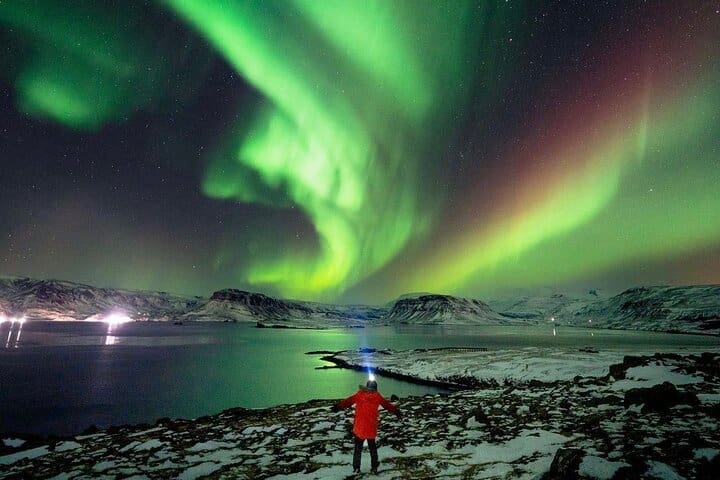
There’s a particular kind of hush that falls over a group of people the moment green light starts moving across the sky above them. It doesn’t matter how many photos they’ve seen beforehand — the real thing always surprises. If seeing the aurora borealis is on your list, Iceland is one of the most reliable places on Earth to try, but “reliable” still means working with nature rather than against it. Here’s how to give yourself the best possible shot.
When the lights actually show up
The northern lights are visible whenever two things line up: dark skies and solar activity. In Iceland that means the season runs roughly from late August through to mid-April — during the brighter months, the midnight sun simply makes the sky too light for the aurora to be visible, no matter how active it is. Within that long window, there’s no single “best month”. Clear, dark, cold nights around the equinoxes (September and March) tend to bring notably good displays, but plenty of travellers get spectacular shows in December or January too. The real variable isn’t the calendar — it’s the weather and the solar cycle, both of which shift from one night to the next.
Reading the forecast like a local
Icelanders check two things before deciding whether to go aurora hunting: the Icelandic Meteorological Office’s aurora forecast, which rates geomagnetic activity on a scale from 0 to 9, and the cloud cover map for the same evening. A high activity number is meaningless if the sky above you is solid cloud — and a modest number 2 or 3 can produce a beautiful show if the sky is glass-clear and you’re away from artificial light. Get into the habit of checking both together, and treat a clear forecast with even middling activity as worth heading out for.
Where to look: escaping the glow
Light pollution is the enemy. Reykjavík’s own glow is enough to wash out a faint aurora, so even a short drive out of the city — 20 to 30 minutes towards Þingvellir or along the Reykjanes Peninsula — makes a real difference. If you’re staying in the capital and don’t have a car, joining an organised hunt takes the guesswork out of it: guides track the forecast and cloud maps in real time and will drive you to whichever pocket of clear, dark sky looks most promising that night, sometimes changing plans mid-evening if conditions shift.
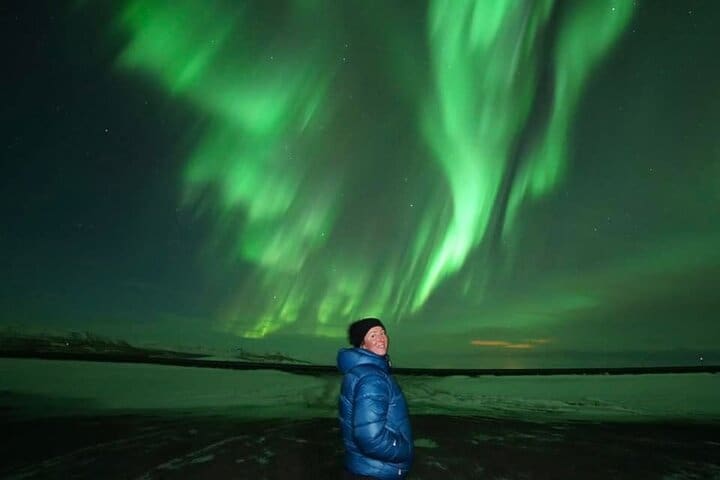
The Private Tour Hunting for the Northern Lights in Reykjavík (from €575, 2–4 hours) does exactly this: a flexible, weather-driven route out of the city with guides who adjust the itinerary based on where the sky is clearest. For something more intimate and photography-focused, the Private Aurora Hunt in Iceland with Professional Photos (from €1,523.62, 4–6 hours) travels in a modified Land Rover Defender with a guide who doubles as a photographer, meaning you come home with proper images rather than blurry phone shots — a detail that matters more than people expect once they’re standing in the dark trying to hold a camera steady.
Getting the technical side right
You don’t need professional gear to photograph the aurora, but a few basics help enormously: a tripod (or anything to keep the camera still), manual focus set to infinity, and a long exposure of several seconds. Phone cameras with a dedicated night mode can now capture a surprisingly good result if kept perfectly still. If you’d rather not fuss with settings while you’re trying to actually watch the sky, tours with a photographer on hand — like the private hunt above — solve that problem for you.
Building it into a longer trip
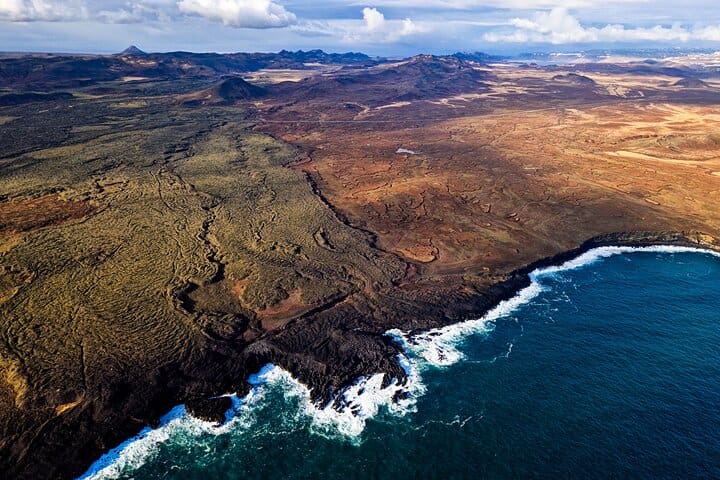
Aurora hunting works well paired with daytime sightseeing, since the lights only appear after dark and you’ll want your days free. If you’re flying into Keflavík, arranging a Private Transfer from Keflavik Airport to Reykjavik (from €85, 45 minutes to an hour) gets you settled into the city calmly rather than juggling luggage and bus schedules on your first night — useful if you’re planning to head straight out aurora hunting once you’ve dropped your bags. For a different angle entirely, the Reykjavik Helicopter Private Tour of Volcanoes (from €1,784.58, 40–50 minutes) won’t show you the aurora, but it’s a striking way to see the Reykjanes Peninsula’s volcanic landscape from above during daylight hours, rounding out a stay built around dark-sky evenings.
Managing expectations
No tour company, however good, can guarantee a sighting — the aurora depends on space weather no one fully controls. What a good guide gives you is the best possible odds: local knowledge of dark spots, real-time forecast reading, and enough flexibility to change plans if the sky turns. Give yourself at least three or four nights in Iceland if the northern lights are a priority, rather than pinning everything on one evening.
Start browsing aurora hunts and build a few dark, clear nights into your Iceland plans — the sky doesn’t send a warning, so it pays to already have the right evening booked when it decides to perform.
[“Northern lights”, “Practical tips”, “Winter”, “Photography”, “Autumn”]
[“northern lights Iceland”, “see aurora borealis Iceland”, “aurora hunting Iceland”]