Iceland’s food scene has quietly become one of the most interesting reasons to visit, and it has little to do with the stereotypes you might have heard. Yes, fermented shark exists. Yes, people really do eat it. But the modern Icelandic table is built on something far more appealing: exceptional seafood, grass-fed lamb, rich dairy traditions, and a new generation of chefs turning old preservation techniques into genuinely delicious food. Here’s what actually deserves a place on your plate.
Start with the everyday staples
Skyr is the easiest entry point. It looks like yogurt but is technically a soft cheese, thick, tangy, and almost fat-free in its traditional form. Icelanders eat it for breakfast, as a post-hike snack, and folded into desserts. You’ll find it in every supermarket and most cafés, usually plain or mixed with fresh berries.
Then there’s the rúgbrauð, a dense, dark rye bread with a faint sweetness, traditionally baked slowly using geothermal heat buried in the ground near hot springs. Pair a slice with smoked trout or butter and you’ll understand why it’s a lunchtime fixture rather than a novelty.
Seafood is the real headline
Iceland’s cold, clean North Atlantic waters produce some of the best seafood anywhere, and it rarely travels far before reaching your table. Fresh cod and haddock show up everywhere, often simply pan-fried or turned into fish stew (plokkfiskur), a humble but deeply comforting dish of mashed fish, potato, and béchamel. Langoustine, caught mainly around the south coast town of Höfn, is sweet and delicate, usually served simply grilled with garlic butter.
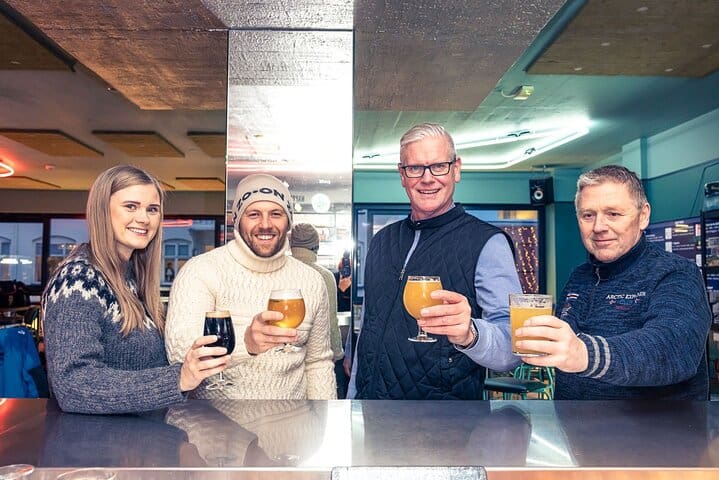
If you want to taste this seafood tradition properly rather than just order it off a menu, the Private Reykjavík Food & Beer Tasting Tour (product code 5560575P2, around €239 for a 4-hour outing) walks you through the capital’s food scene with a guide who can point out what’s actually local versus what’s aimed at tourists, pairing bites with Icelandic craft beer along the way.
The dishes that need a little courage
This is where Icelandic food earns its reputation. Hákarl, fermented Greenland shark, is cured and hung to dry for months, and it smells considerably stronger than it tastes, though that’s not saying much. It’s traditionally washed down with a shot of brennivín, an unsweetened schnapps flavored with caraway that locals affectionately call “black death.” Then there’s svið, a singed sheep’s head served whole, and hangikjöt, smoked lamb that’s far more approachable and genuinely worth seeking out, especially around the holidays, though many restaurants serve it year-round.
None of this is daily eating for most Icelanders anymore; these are Þorramatur foods, traditionally associated with the midwinter Þorri festival, but they do survive on some tasting menus and at food halls, and trying a small piece is a good story even if you don’t finish it.
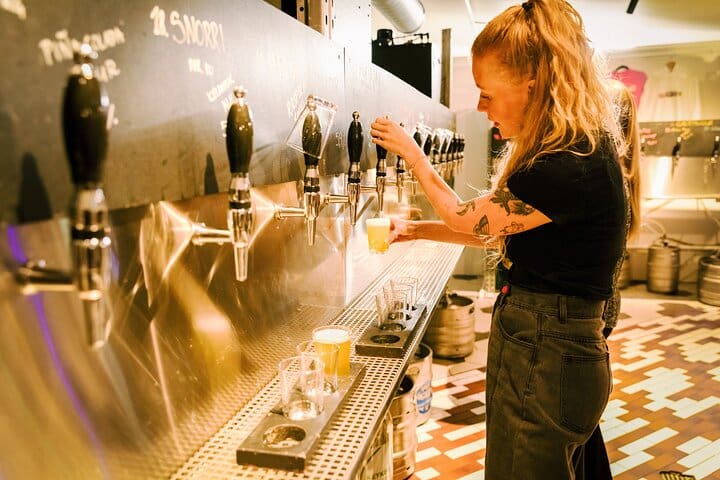
A guided outing takes the guesswork out of deciding what’s worth the risk. On the Private Reykjavik Beer & Booze Tour (product code 42496P32, roughly €170 for 2 to 2.5 hours), you’ll sample craft beers and regional snaps while your guide explains which traditional foods pair with which drink, and why.
Lamb, skyr desserts, and the sweet side
Icelandic lamb is genuinely different from lamb you’ll find elsewhere; the animals graze freely on wild herbs and grasses across the highlands all summer, which gives the meat a distinct, slightly gamey flavor. Slow-roasted leg of lamb or lamb soup (kjötsúpa) are the dishes to order on a cold day.
On the sweet side, don’t skip kleinur, a twisted, lightly spiced doughnut, or a slice of vínarterta, a layered prune cake brought over by Icelandic emigrants and still baked for celebrations. Many bakeries sell both fresh each morning.
Eating outside Reykjavík
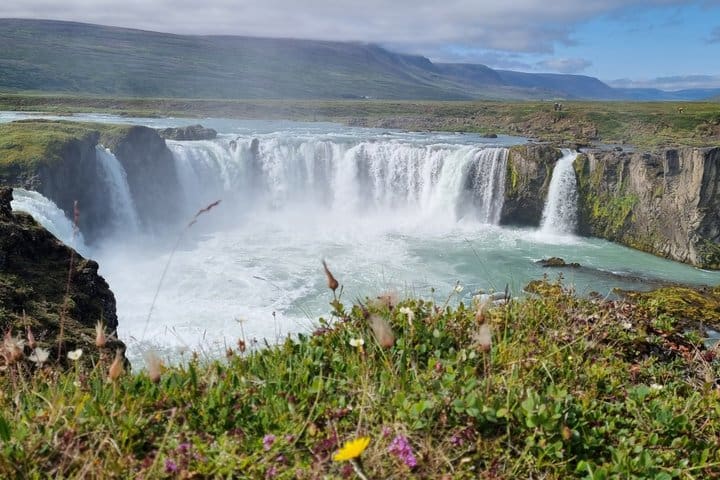
Food tastes different closer to where it’s produced, and a day trip is the easiest way to experience that. North Iceland has its own strong food identity, and the Akureyri Express Goðafoss Waterfall and Akureyri Highlights tour (product code 5645897P34, about €163.54 for 5 hours) includes time in Akureyri town, where small cafés and bakeries serve a noticeably different character of baked goods and smoked fish than you’ll find in the capital.
If your route takes you through the countryside on the Golden Circle Tour from Reykjavík: Þingvellir, Geysir & Gullfoss (product code 5592730P1, around €1,280 for a private 7-hour day), ask your driver-guide about stopping at a farm café along the way. Several in the area serve soup made with their own lamb or vegetables grown in geothermally heated greenhouses, which is as close to farm-to-table as it gets.
Eating like you mean it
The best approach to Icelandic food is curiosity without pressure. Try the skyr, order the fish stew, and if you’re feeling bold, take a small bite of hákarl just to say you did. A guided food tour takes away the guesswork on where to go and what’s actually good, letting you taste more in a few hours than you’d manage wandering on your own. Start exploring the tours above and build a day around eating well.
[“Food and drink”, “Reykjavik”, “Practical tips”, “First visit”]
[“Icelandic food guide”, “what to eat in Iceland”]